

In Singapore’s race-week suites, the guest list outranks the grid
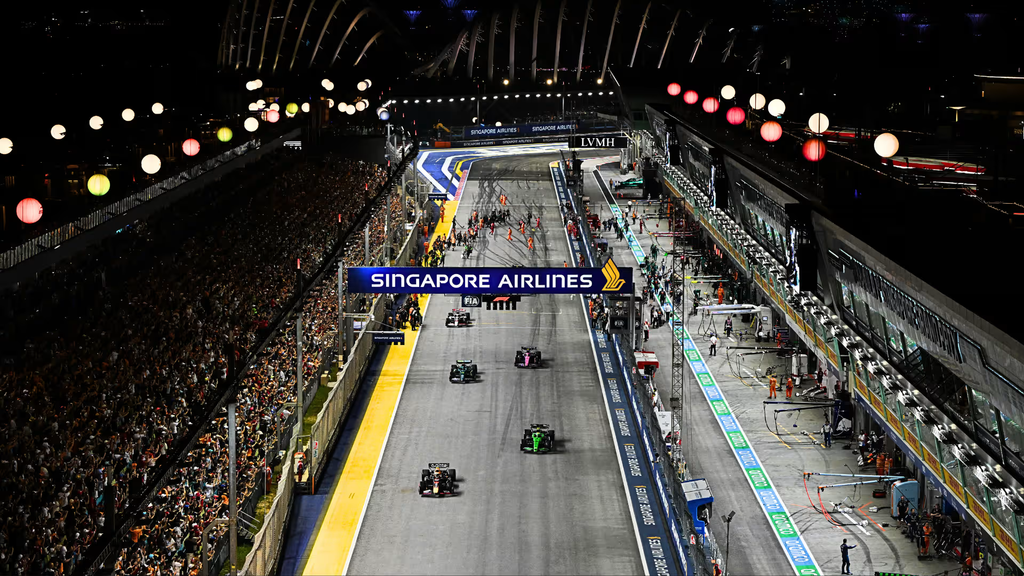
Photo credits: www.formula1.com
Among affluent and high net worth respondents in nine markets who socialize in paddock clubs and team hospitality, 88% do not also socialize at live motor-sport events.
As Singapore’s race week fills its suites, what a brand partner is really buying is the guest list, not the track.
People who socialize in paddock hospitality are mostly not the people who socialize at live motor-sport events, such as Formula 1 races or MotoGP, examples to be matched to survey answer options.
Agility’s TrendLens survey asked 5,800 affluent and high net worth respondents across nine markets where they socialize. Of those, 500 named paddock clubs and team hospitality, and only 61 of those 500 also named live motor-sport events. The other 88% did not.
Hospitality guests are no keener on the race itself than anyone else.
Among paddock hospitality respondents, 22% rank a Formula One Grand Prix among the five luxury events they would most like to attend, compared with 24% of those who don’t name paddock hospitality. That matters for any partnership briefed on the assumption that a hospitality guest is a racing enthusiast.
Singapore sells race week as a social calendar
Singapore’s density of wealth is part of what makes the Grand Prix such a magnet for VIP packages and luxury brands.
The city-state is home to roughly 245,000 US dollar millionaires, Henley & Partners, edition to be confirmed, around 27,000 of whom hold more than US$30 million in net assets, source to be confirmed and 55 billionaires (Forbes, 2026). Few host cities can match that concentration of capital, but it comes with a catch.
For this crowd, the paddock is less a place to watch racing than a place to be seen and to network. Brands that assume access to these guests translates into engagement with F1 risk spending heavily on activations that guests treat as a backdrop to the real event: the socializing.
Marina Bay Sands’ Scuderia Ferrari all-access package shows how Singapore sells the weekend: at S$100,000 for two people, it combines five nights in a Paiza Grand Suite with Paddock Club access, a private Ferrari event and VIP invitations to parties and brunches.
The official Singapore Grand Prix site shows the Paddock Club, Sky Suite and TWENTY3 as sold out, with remaining premium options listed at around S$5,110 to S$7,508 for three days. The Paddock Club package itself is described in terms of air-conditioned suites, restaurants, viewing galleries and daily pit-lane walks.
The schedule around the circuit leaves room for the same kind of hosting. Sunday’s race starts at 8pm local time, which keeps the day free for meetings and lunches. Grand Prix Season Singapore, the Singapore Tourism Board’s program of race-themed lifestyle events across the city, runs from 2 to 11 October, with the race weekend itself on 9 to 11 October.
Singapore luxury lifestyle magazine The Peak lists a Singapore Formula 1 Family Office Summit from 9 to 11 October for family-office principals and high net worth investors. Singapore’s The Straits Times reports estimates that high net worth travelers make up about 30% of F1 visitors and account for roughly 40% of tourist spending during race week.
Singapore’s The Business Times, in its feature “Cashing in on the circuit”, reports that hospitality buyers have broadened from bankers and finance executives to include tech founders, venture capitalists and crypto entrepreneurs, partly because the TOKEN2049 conference brings wealthy attendees to the city at around the same time. The same feature cites Visa data showing race-week increases in late-night and corporate-card spending.
This pattern shows in what VIP clients value most. In five markets, our 2026 TrendLens survey found that none of the top priorities was about the sport itself.
American and Indian VIPs value the chance to meet interesting people most, while Indonesian and Thai VIPs rank priority access to events first. Chinese VIPs, by contrast, put personal connection with the brand at the top.
The lesson for brands is that the Grand Prix works as a stage for connection, access and status, so experiences should be designed around how each audience wants to feel, not around how much they love racing.
Paddock hospitality and the brand brief
TrendLens did not survey race-week guests at Marina Bay. It covers affluent and high net worth people in nine markets, so it describes who uses paddock hospitality, not Singapore’s suites specifically.
Read alongside how Singapore packages the weekend, the figures point to a hospitality audience defined by where it gathers more than by what it watches.
For a partnerships lead, that changes what a race-week deal should be judged on.
Activations built on speed, engineering and driver access speak to the 12% of paddock hospitality respondents who also name live motor-sport events as a place they socialize. The other 88% name paddock hospitality as a place to socialize without naming live motor-sport events.
For that larger group, the brand’s part in the weekend is its hosting: who is seated together, which dinner follows the race and which invitation leads to a second meeting.
A useful test after race week is to ask guests which conversation they remember, and to weigh that answer alongside screen time and logo exposure.
A brand partner that builds its Singapore suite around the racing is designing for the smaller group, and puts at risk the client relationships its hospitality budget was approved to build.